Book Edition Recommendations
Which edition of “The Tempest” should I buy?
Any edition of “The Tempest” will do. The question is, which edition will enhance your adult experience of the play? Each edition described below is aimed at somewhat different readers. BookFest suggests, unless you’ve read or seen “The Tempest” recently, start fresh, buy a new copy. Don’t be biased by your old notes in the margins. You’re a different, and a better reader now.
Five readily available editions of “The Tempest”, some clean and used under $10, are described below. Our seminar leader has read them all—every introduction and background essay and BookFest strongly recommends two:
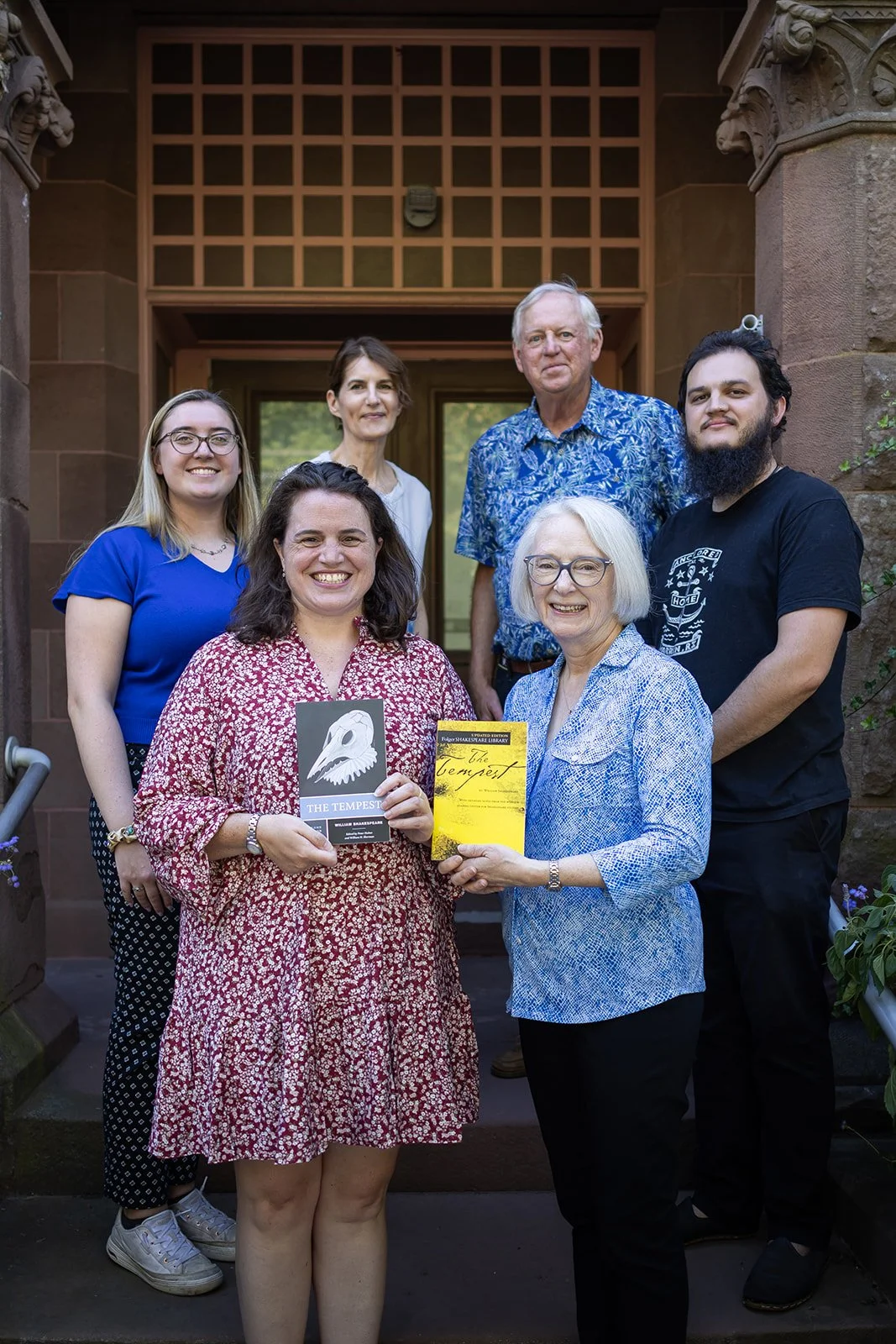
The Folger Shakespeare Library, “The Tempest” (304 pp; yellow cover). Considering its pedigree, this edition from the greatest Shakespeare library on earth is our most highly recommended, so readable, with notes on the left-hand page directly opposite Shakespeare’s text on the right. A drawback is the smallest format of these 6 editions (8.25 x 5.5 inches), leaving little space for your notes. If you’re likely to write a lot in your margins, consider the Norton.
Norton Critical Edition, “The Tempest” (400 pp, 390 of which are background essays; black and gray cover with striking artwork of a bird’s skull in Renaissance white lace ruff collar). This edition is not for the faint of heart, but it is recommended for BookFest readers who want early angles on Shakespeare that may reappear in our Winter Seminar. Notes on the text appear at the bottom of each page, which may not be as easy for some readers as the side-by-side notes in the Folger edition.
You need not buy multiple editions! The Winter Seminar (six weekday evenings mid-January to mid-February 2027) will cover much of what you miss by not owning every edition. We caution against reliance on Cliff’s Notes and Monarch Notes, though they are terrific in their own way because this is a play about magic, one-third of which is told by one character— sometimes identified as Shakespeare in disguise. These challenges make “The Tempest” an early example of what we now call “metafiction” (real life impinging directly on the fiction) and we might be wary of an “unreliable narrator.” (BookFest regulars will remember this problem from “The Odyssey” forward through “Moby-Dick”, “Fahrenheit 451”, and “Mrs. Dalloway”.) Any easy summary of this play runs a risk—because, as we’ll see with Stephen Orgel’s analysis, discussed below, not only is very little as it seems, but even what seems to be leaves an astonishing number of unanswered questions.
Resources: The Folger Shakespeare Library offers Shakespeare resources online, for free. Have a look.
Three other options:
The Arden Shakespeare, “The Tempest”, Revised Edition (390 pp; haunting blue cover of a face brooding over the sea). This is considered the go-to edition for those putting on the play, with more and longer notes than necessary for many, including less experienced readers of Shakespeare. The introduction alone is 160 pages; notes expand the text to a whopping 140, but trust editors Virginia Mason Vaughan and Alden T. Vaughan not to waste a minute of a serious reader’s time.
Oxford World’s Classics, “The Tempest” (256 pp; the title and tempestuous seas on the cover). Notes appear at the foot of each page of Shakespeare. Buy the Oxford edition with introduction and essays by Stanford University’s Shakespeare guru, Stephen Orgel. Orgel’s views of “The Tempest” are original, even iconoclastic, but always arguably correct. We will depend upon him now and then in our Winter Seminar because reading or watching “The Tempest” without Orgel is like watching “The Wizard of Oz” all the way through in black-and-white—and turning off the film before Dorothy “decodes” (exposes what’s behind) the land of Oz.
No Fear Shakespeare, “The Tempest”, Deluxe Student Edition (296 pp., blue and yellow cover, largest format of these editions). For first-time readers of the Bard: each left-hand page is Shakespeare, each right-hand page is a clear translation into modern English. We see two problems for BookFest’s skilled readers: If you need help with only one word or short phrase on a line, it’s harder to separate that out from a translation that may differ significantly from Shakespeare’s text; and there’s the temptation to stop reading Shakespeare and rely on the modern English—which defeats the purpose. Perhaps just cover the right-hand pages unless you need help?