
About BookFest
Bristol BookFest is an annual humanities program designed to inspire readers, deepen understanding of significant works of literature and enrich community life.
This volunteer enterprise attracts engaged audiences, with wintertime programming that culminates in a two-day weekend event with leading scholars in early April.
Bristol BookFest has shown itself to be resilient and forward thinking since its launch with “All the King’s Men” — originally scheduled for an in-person event in March 2020 but postponed due to the COVID-19 pandemic and presented in October 2020 as a fully remote event. To host the second BookFest weekend in person, the presentation of “Frankenstein, or the Modern Prometheus,” was delayed until Spring 2022.
Since then, Bristol Bookfest has offered this annual community programming in person, in the heart of downtown Bristol, Rhode Island, in collaboration with the Friends of the Rogers Free Library, the Rogers Free Library, Roger Williams University, Linden Place, the Bristol Art Museum and the Bristol-Warren School District.
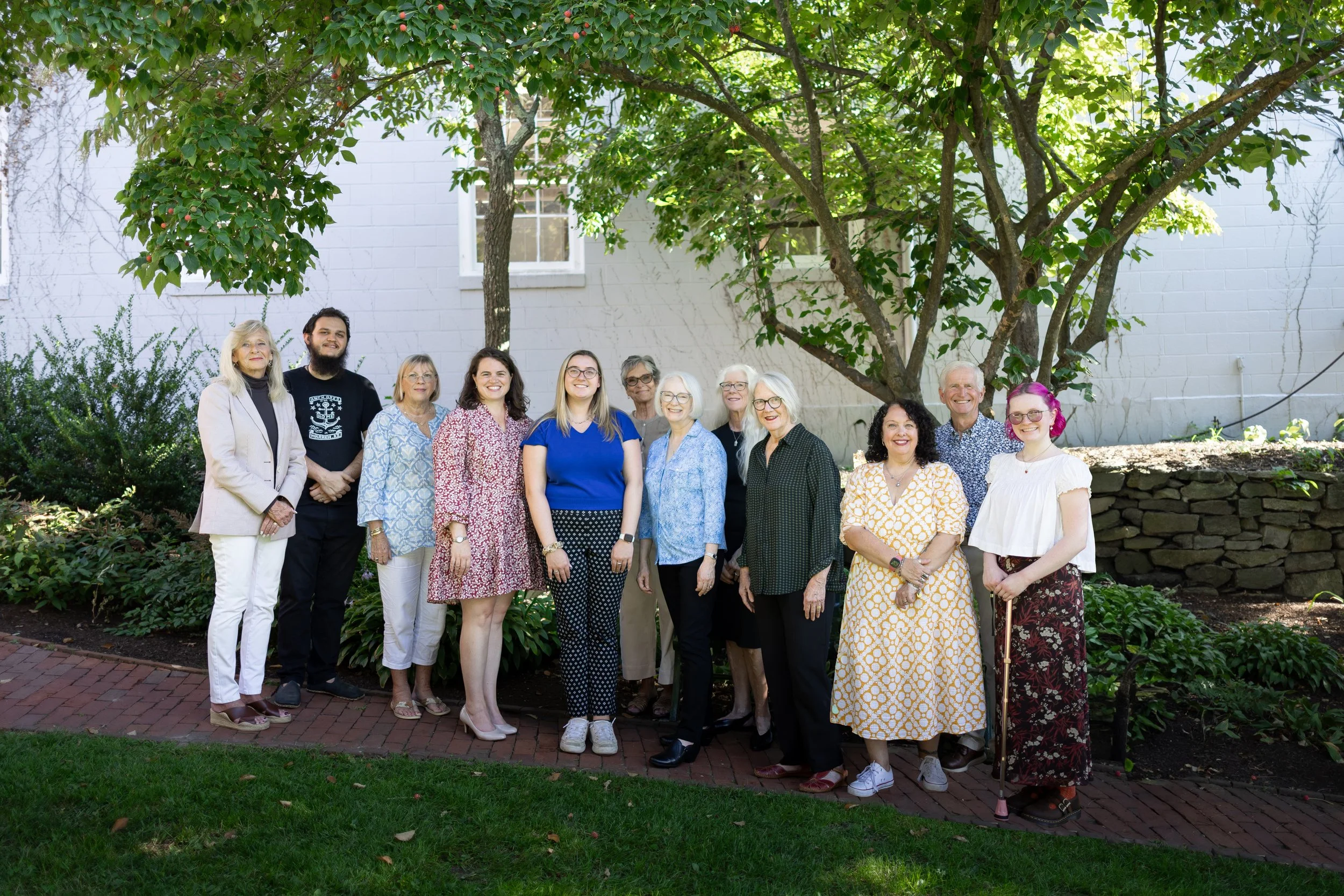
The Bristol BookFest Steering Committee provides oversight for all aspects of Bristol BookFest. The current co-chairs are Beverly Larson and Kim Petta.
-
Bristol BookFest was founded in 2019 by Joanna Ziegler and Charles Calhoun, who thought that the town might welcome a lively new event in the quiet months: late winter, early spring. They hoped to bring together local readers who would enjoy sharing a “big” book.
More than a community book group, it was conceived as and continues to be an unusual opportunity for readers in a small town to connect with college-level teacher-scholars who are experts in a relevant field. The idea quickly caught on, and BookFest is a permanent part of the calendar for a growing number of Bristolians and our East Bay neighbors.
-
2026: Virginia Woolf’s “Mrs. Dalloway” (1925), raising themes of identity, time and the complexity of human consciousness that remain as resonant in the 2020s as they were in the 1920s, inviting readers to reflect on their own inner lives and connections to others.
2025: Ray Bradbury’s “Fahrenheit 451” (1953), a chilling vision of a dystopian future where books are banned and critical thought is suppressed. This enduring classic serves as a powerful warning about the fragility of intellectual freedom and the dangers of censorship.
2024: Herman Melville’s “Moby-Dick” (1851), a tale of the sea and perhaps the greatest American novel.
2023: Emily Wilson’s enthusiastically welcomed, highly readable new translation of Homer’s 3,000-year-old epic, “The Odyssey.” Can you go home again, it asked. What will you find there?
2022: Mary Shelley’s “Frankenstein; or, The Modern Prometheus” (1816), the founding text of science fiction and a cautionary tale about the dangers of getting what you asked for without having thought of the repercussions.
2020: Robert Penn Warren’s “All the King’s Men” (1946), widely recognized as the best American novel about politics — and a clash of ideals and raw ambition. Presentation online due to the pandemic; all others offered in person in Bristol, Rhode Island.
-
Joan Abrams
Cheryl Allen
Gail Burmeister
Steve Calvert
Robin Crocker
Mare Davis
Travis DeLong, treasurer
Elizabeth Hanson
Kasey Kennedy
Beverly Larson, co-chair
Kim Petta, co-chair
Lydia Prendergast
Renee Soto, secretary
Ann Kathrin Weldy
-
Betty Brito
Allen Clark
Jillian Hanon DeLong
Susan Hibbitt
Elisabeth Lavers
Tina Palmer
Lianne Pinheiro
-
When I first saw the Instagram post about the “Mrs. Dalloway” book festival in Bristol, Incould hardly believe it — one of my favorite novels celebrated with such an incredible lineup of speakers and events. The keynote by Merve Emre still has me thinking about the novel in new ways.
Everything about the festival felt thoughtful, engaging and exceptionally high quality, from the discussions to the atmosphere. I’m so grateful to have discovered this group and already can’t wait to find out what next year’s book will be.
— Diana Champa
The Conversation Parlor [segment] was wonderful. Being in the Linden Place ballroom full of Woolf readers I’d never otherwise have met, all of us willing companions to Mrs. Dalloway, is rare. What startled me was how readily we fell to remembering our first encounters with the text, the disorientation of reading in and around her consciousness.
Sitting with the memories of first bewilderments together, from such different distances and places, is exactly what I love about Woolf: an interiority that never has to resolve itself.
With Bristol BookFest’s conversation cards, the gathering became communal. We were no longer only an audience. We were celebrating what each of us had made of Woolf, as readers. The conversations fizzed, and there was nowhere near enough time. The act of reading is a solitary one. Bristol BookFest gave it a room full of company, a room, if you like, of our own.
— Cherie Rowe
The weekend conference on “Mrs. Dalloway” exceeded my expectations. I have studied Virginia Woolf and “Mrs. Dalloway” extensively in the past, but every speaker, presentation and conversation at BookFest gave me new information to think about, new perspectives to consider and new ideas to challenge my assumptions.
I once attended a weeklong Virginia Woolf conference at Smith College where Woolf scholars from all over the world spoke and led discussions of their work, and BookFest was just as exciting and inspiring to me. I felt like I was back in graduate school again, and graduate school was one of the best times of my life.
— Mare Davis (who later joined as a 2027 committee member)